

Premium Walnut Cutting Board Oil – 12 oz
$24.95
Sale price
$24.95
Regular price
Skip to product information


Premium Walnut Cutting Board Oil – 12 oz
$24.95
Sale price
$24.95
Regular price
Shipping calculated at checkout.
Walnut Oil, 12 oz $24.95
True Board Towel $11.99
Care kit savings −$5.00
Total
Heat-treated, filtered walnut oil that seals, protects and brings your teak back to life. 100% plant-based, petroleum-free and food-safe.

Board care, done right
Protect your investment. Year after year.
Teak carries its own natural oils. Every hot-water wash pulls a little of them out. This bottle puts it back: five minutes, about once a month, and your board stays sealed, rich and ready for decades of cooks.
- Heat-treated & filtered
- 100% plant-based
- Petroleum-free
- Won't go rancid
Straight from Jonny
Which oil is best for your board?
Three minutes. Why we pass on mineral oil and kitchen oils, why heat-treated walnut oil wins, and how Jonny oils his own board.
“I wash my board frequently and I use oil about once a month.”
Jonny, The True Board

What it does
Dry wood cracks. Oiled wood lasts.
-
Soaks into the grain
It penetrates the teak and slows down how much water, juice and odor the wood takes in.
-
Cures into a shield
Heat-treated walnut oil polymerizes: it dries and hardens inside the grain instead of staying wet like mineral oil.
-
Brings the color back
Pale, thirsty teak turns deep honey-gold again. Same board, new life.
How to oil your True Board
Three steps. Five minutes.
Five minutes of hands-on work, the same routine Jonny uses on his own board. Then let the wood do the rest.
-
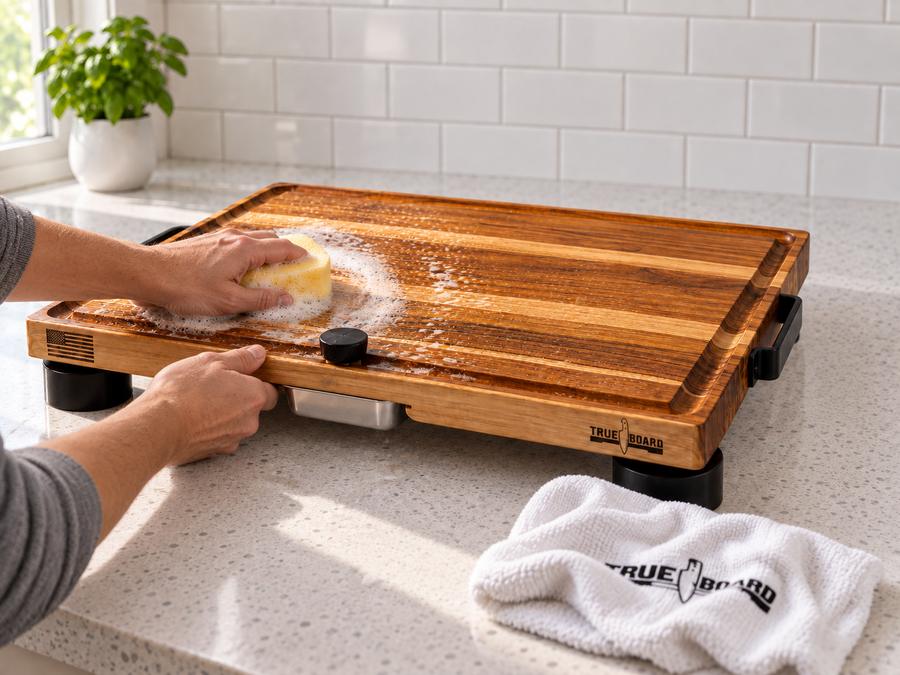
Clean & dry
Hot water, a little soap, a good scrub. Towel it off and let it air-dry completely. Never oil a wet board.
-
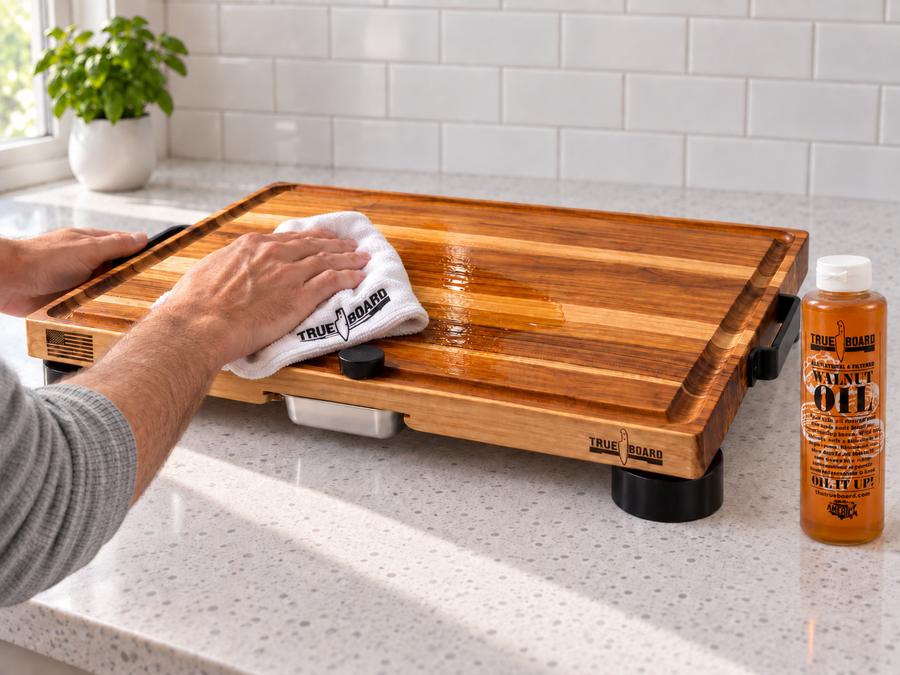
Wipe it on
Be generous. Pour a little puddle and spread it with the grain using your True Board towel or any soft cloth, across the cutting surface, the edges and the juice groove.
-
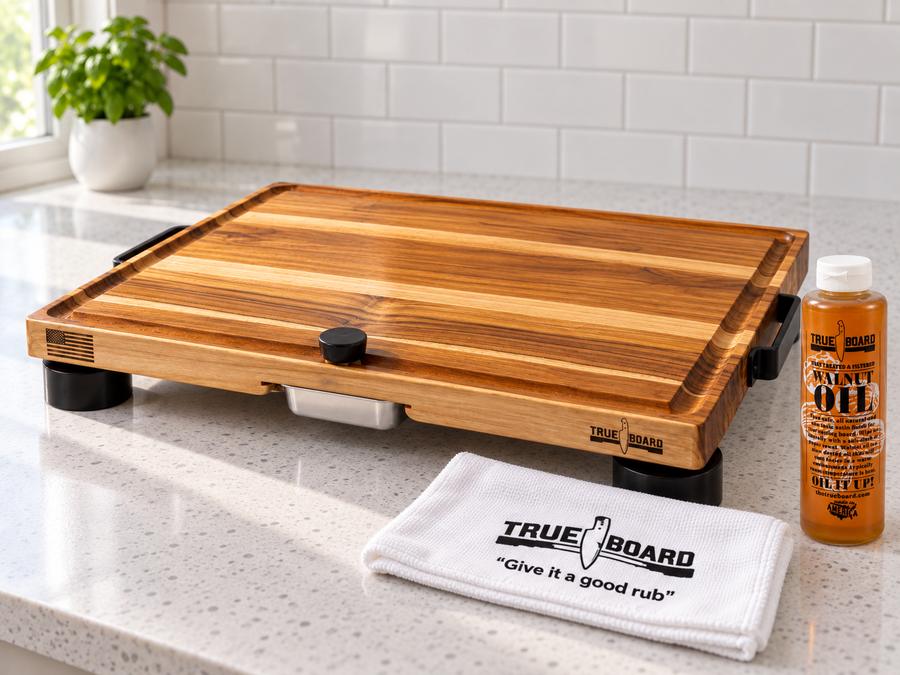
Let it cure
Let it soak in, then wipe off whatever sits on top. It's food-safe right away; a night at room temperature gives you the toughest finish.
When to oil
Your board will tell you.
-
Looks pale or chalky
The honey-gold fades to a dull, grayish tan.
-
Feels rough
Run your fingers across it. Fuzzy, raised grain means it's thirsty.
-
Water soaks right in
Drops disappear into the wood instead of sitting on top.
-
Fine hairline cracks
Don't wait on these. Oil now, before small becomes structural.
The drop test
Sprinkle a few drops of water on the board. If they bead up, you're protected. If they vanish into the wood, it's time.
- Everyday use
- About once a month
- Weekend griller
- Every two months


Why walnut
Walnut, not petroleum.
Mineral oil is the answer you'll find first. It works, but it comes from petroleum and never cures. Kitchen oils cure even less and go rancid inside the wood. Heat-treated walnut oil gives you the best of both: plant-based, and it dries into the grain.
| Feature | True Board Walnut Oil |
Mineral oil |
Olive / veg oil |
|---|---|---|---|
| Comes from | Walnuts | Petroleum | Plants |
| Petroleum-free | Yes | No | Yes |
| Goes rancid in the wood | No, heat-treated | No | Yes |
| Dries & cures in the grain | Yes, polymerizes | No, stays liquid | No |
| Made for cutting boards | Yes | Yes | No |
Food-grade mineral oil is considered safe for food contact. We simply don't want petroleum on the surface where we cut our food.

Nut allergies
Heat-treated. Protein removed.
It's the first question we get, and it's the right one. Walnut allergies are triggered by the proteins in the nut. Raw walnut oil carries them. Ours is heat-treated and filtered to take them out.
- Heat-treated to take the protein out
- Filtered until no protein is detectable by mass spectrometry and colorimetric testing
- Stable: the same process keeps it from going rancid
No finish can promise zero risk for everyone. If you live with a severe nut allergy, check with your doctor before using any walnut product.
One bottle
Every wooden thing in your kitchen.
- Cutting boards
- Butcher blocks
- Wooden bowls
- Spoons & utensils
How often should I oil my True Board?
About once a month with everyday use, every two months if it's a weekend board. When it looks pale or water soaks in instead of beading, it's time.
Can I cook on it the same day?
Yes. The oil is food-safe the moment it's on the board. For the toughest finish, give it a night to cure before your next big cook.
Will it leave my board sticky or taste like walnuts?
No. Wipe off the excess and it cures into the wood. Once it's in, it's odorless and tasteless.
Can I use olive, vegetable or coconut oil instead?
Skip olive and vegetable oil: they go rancid inside the wood and can leave a sour smell. Fractionated coconut oil is safe, but it doesn't cure into the grain the way heat-treated walnut oil does.
Is it safe if someone at home has a nut allergy?
Our walnut oil is heat-treated and filtered to remove the proteins that trigger walnut allergies. No finish can promise zero risk for everyone, so if you live with a severe nut allergy, check with your doctor first. How it's made
My board is already dry or cracked. Is it too late?
Not at all. Clean it, let it dry, then give it two or three coats, letting each one soak in before the next. Oil brings back the color and protects the wood around fine hairline cracks, but it won't close a deep split.

Ready when you are
Oil it up. Your board will thank you.
Premium Walnut Cutting Board Oil – 12 oz
One bottle, a soft cloth and five minutes a month. That's all it takes to keep your board sealed, rich and ready for the next cook.
- 12 oz
- Heat-treated & filtered
- Made in America
Walnut Oil, 12 oz $24.95
True Board Towel $11.99
Care kit savings −$5.00
Total
Raise it up 🔥